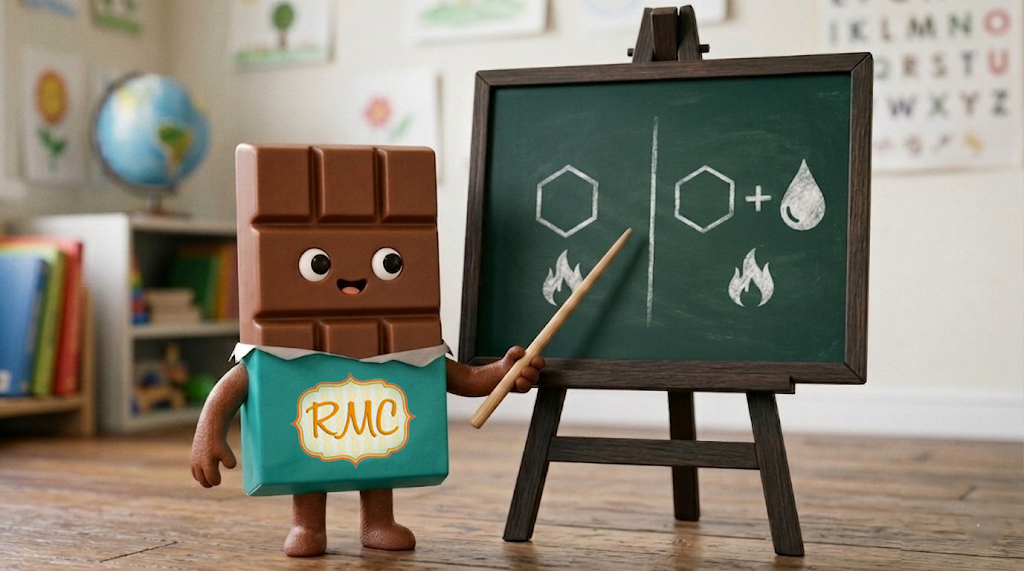
Brown Sugar: Caramelization and the Maillard Reaction
Walk into any kitchen where candy is being made, and your nose will tell you something interesting is happening long before your eyes do. That rich, toasty, complex aroma rising from the pan? It’s chemistry at work: specifically, two of the most important reactions in all of cooking. Caramelization and the Maillard reaction are both responsible for browning, both produce incredible flavors, and in candy making they often happen at the same time. But they are not the same thing, and understanding the difference will make you a better candy maker.
Caramelization: Sugar Transforms Itself
Caramelization is what happens when sugar gets hot enough to break down on its own. No other ingredients required. Just sugar and heat. When sucrose (plain table sugar) reaches around 160°C (320°F), it begins to melt and decompose. The molecules break apart, shed water, and reassemble into hundreds of new compounds. Those compounds are what give caramel its color, its bittersweet depth, and its characteristic aroma.
The process is a cascade. As temperature rises, the flavor evolves. Light caramelization produces mild, buttery sweetness. Push further toward 180°C (356°F) and the flavor becomes richer, more complex, and more bitter. Go too far and you’ve made carbon. The candy maker’s job is to pull the sugar at exactly the right moment for the flavor profile they’re after.
In candy making, caramelization shows up most purely in hard candies where there’s no dairy in the pan. Lemon Drops are a clean example: sugar, water, cream of tartar, citric acid, lemon extract. No protein sources anywhere. Any browning happening in that pan is caramelization. It also appears in a more controlled way when a culinary torch hits a sugar crust, as in the brûlée topping on Crème Brûlée Fudge. Pure sugar, intense heat, rapid caramelization – that’s the crackly amber layer doing exactly what it’s supposed to do. Watch the episode here.
The Maillard Reaction: Sugar Meets Protein
The Maillard reaction (named for French chemist Louis-Camille Maillard, who first described it in 1912) is a different kind of browning altogether. Where caramelization only needs sugar, the Maillard reaction requires two things: a reducing sugar and an amino acid. In practical terms, that means you need both sugar and a protein source present together.
When reducing sugars (like fructose or glucose) come into contact with amino acids under heat, they react and form new compounds: melanoidins, which are responsible for the brown color, and a wide array of volatile flavor compounds that produce aromas we associate with roasted, cooked, and baked foods. The reaction typically kicks in around 140°C (285°F), though it can proceed slowly even at lower temperatures given enough time.
In candy making, the Maillard reaction is doing a lot of quiet work. Any recipe that combines sugar with dairy – cream, butter, condensed milk, evaporated milk – is setting the stage for Maillard browning. Fudge from a 1941 Recipe develops its characteristic flavor largely through this reaction – milk and butter cooking with sugar over heat, producing something that tastes more complex than either ingredient could on its own. Salted Caramels are another prime example, with heavy cream and butter bringing the amino acids that make Maillard chemistry possible.
The Crème Brûlée Fudge illustrates this well. As the cream and sugar cook together in the pan, the milk proteins and sugars are reacting – that’s Maillard chemistry building the fudge’s flavor base.
Where They Overlap – and Where They Diverge
In a candy kitchen, caramelization and the Maillard reaction are often happening simultaneously. They produce similar results on the surface: brown color, complex flavor, heat-driven transformation. The Salted Caramels recipe actually shows both running in sequence in the same pan – the sugar caramelizes to 320°F first, then the cream and butter go in and Maillard chemistry takes over from there.
The differences are worth knowing, though. Caramelization only needs sugar. The Maillard reaction needs both a reducing sugar and amino acids from a protein source, and without both present, it doesn’t run. That’s the most important distinction. If you’re making hard candy from pure sugar and water, any browning you see is caramelization. Add cream, butter, or milk, and both reactions become possible.
Temperature matters too. Maillard chemistry gets going around 140°C (285°F). Caramelization of sucrose generally waits until around 160°C (320°F), so in a dairy-based candy, the Maillard reaction has a head start.
The flavor outputs are related but distinct. Maillard produces a wide range of aromatic molecules – that’s where a lot of the savory-sweet complexity in fudge and milk caramel comes from. Caramelization produces its own family of flavors: bittersweet, slightly burnt, the quality that makes a brûlée crust taste unmistakably like a brûlée crust.
One other difference worth knowing: the Maillard reaction speeds up in alkaline conditions. That’s why dutched cocoa or baking soda can deepen browning in baked goods. Caramelization is less affected by pH.
At a Glance
| Caramelization | Maillard Reaction | |
|---|---|---|
| Ingredients needed | Sugar only | Sugar + protein (amino acids) |
| Starts around | 160°C / 320°F | 140°C / 285°F |
| Result | Brown color, bittersweet flavor | Brown color, complex savory-sweet flavor |
| pH sensitive? | Minimally | Yes – speeds up in alkaline conditions |
| Common candy examples | Hard candy, brûlée crust | Fudge, milk caramels, butterscotch |
Why It Matters in Your Kitchen
You don’t need to memorize the chemistry to use it. What’s useful is knowing which reaction you’re working with – and what you can actually control.
If your recipe has only sugar (and water or another non-protein liquid), your browning is caramelization, and temperature is your main lever. If it includes dairy, you have both reactions running, and the interaction of sugar, protein, heat, and time is what builds the flavor.
The Crème Brûlée Fudge puts both in one recipe. The fudge body gets its depth from Maillard chemistry as cream and sugar cook together. The brûlée crust on top is pure caramelization – a tablespoon of sugar hit with a torch, going from white and sweet to amber and complex in seconds. Same pan, different moment, different reaction.
Interested in going deeper on sugar behavior in the kitchen? See also: Sugar Stages – The Candy Maker’s Roadmap.